
What's the Difference Between Pebble Beach and Spyglass Hill?
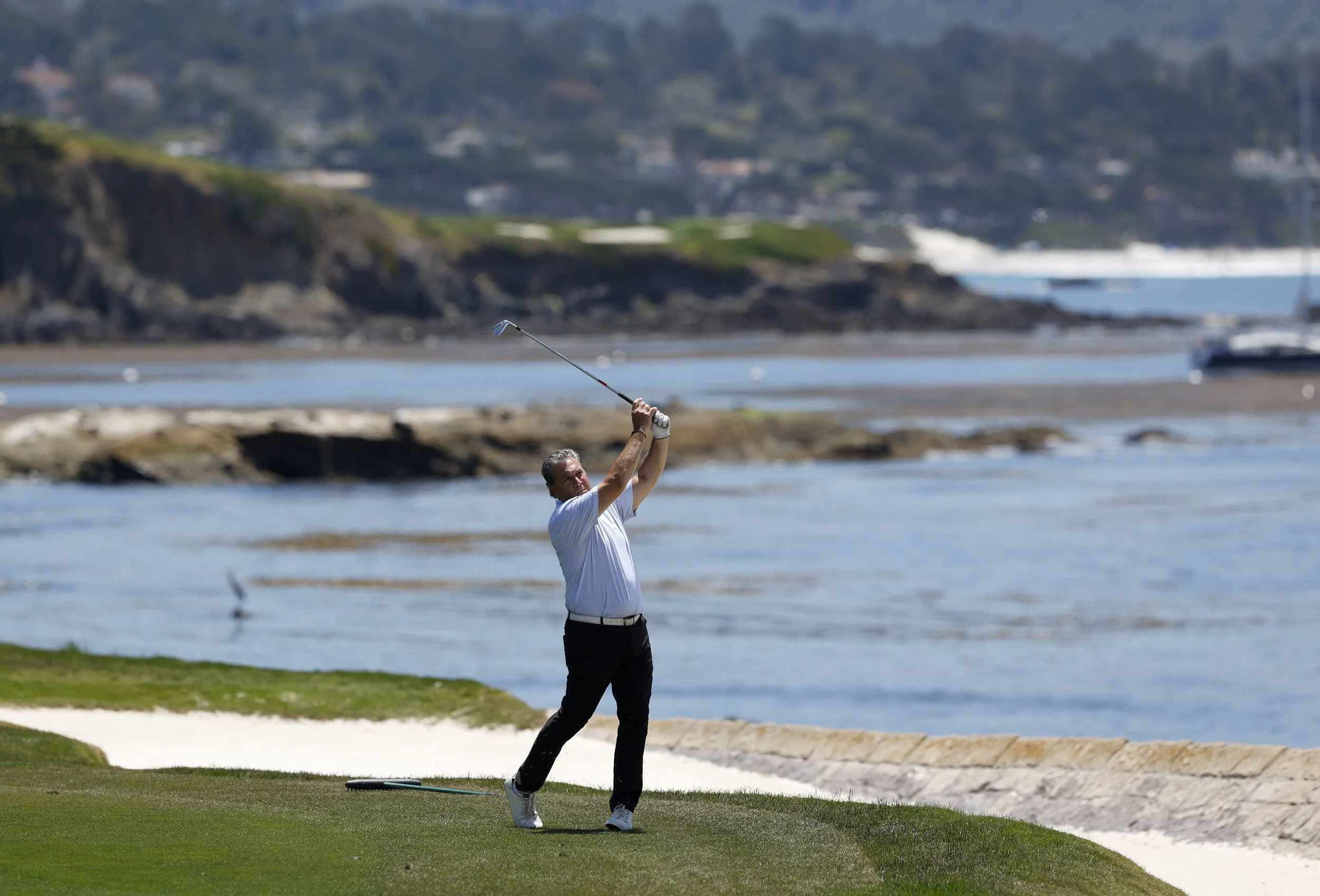
If you're planning a golf trip to the Monterey Peninsula, you've almost certainly asked yourself this question: should I play Pebble Beach Golf Links, Spyglass Hill — or both?
Both courses sit within Pebble Beach Resorts. Both have hosted major championships. Both are jaw-droppingly beautiful. And both will test your game in ways that most public courses never will.
But they are very different experiences. Understanding how they differ will help you decide which course deserves a spot on your itinerary — and whether you're ready to take on the course many PGA Tour pros consider the more demanding of the two.
At Tee Time Photos, we've played and photographed both. Here's everything you need to know.
The History
Pebble Beach Golf Links is the elder statesman. Opened in 1919 and designed by champion amateurs Jack Neville and Douglas Grant, it was built on one guiding principle: run as many holes as possible along the Pacific coastline. The result is a layout that remains one of the most celebrated in the world more than a century later.
It has hosted six U.S. Opens — with a seventh confirmed for 2027 — and its list of champions includes Jack Nicklaus, Tom Watson, Tom Kite, Tiger Woods, Graeme McDowell, and Gary Woodland. Golf Digest has ranked it the No. 1 public golf course in America every year since rankings began in 2003.
Spyglass Hill Golf Course is the younger sibling, opened in 1966 and designed by the legendary Robert Trent Jones Sr. Its name is drawn from Robert Louis Stevenson's novel Treasure Island — Stevenson himself once wandered the Del Monte Forest where the course now sits. While it may lack the U.S. Open pedigree of Pebble Beach, Spyglass has earned its own championship credentials as a co-host of the AT&T Pebble Beach Pro-Am and a venue for two U.S. Amateur Championships (1999 and 2018).
The Terrain: Ocean vs. Forest
This is the most significant difference between the two courses, and it shapes every aspect of the experience.
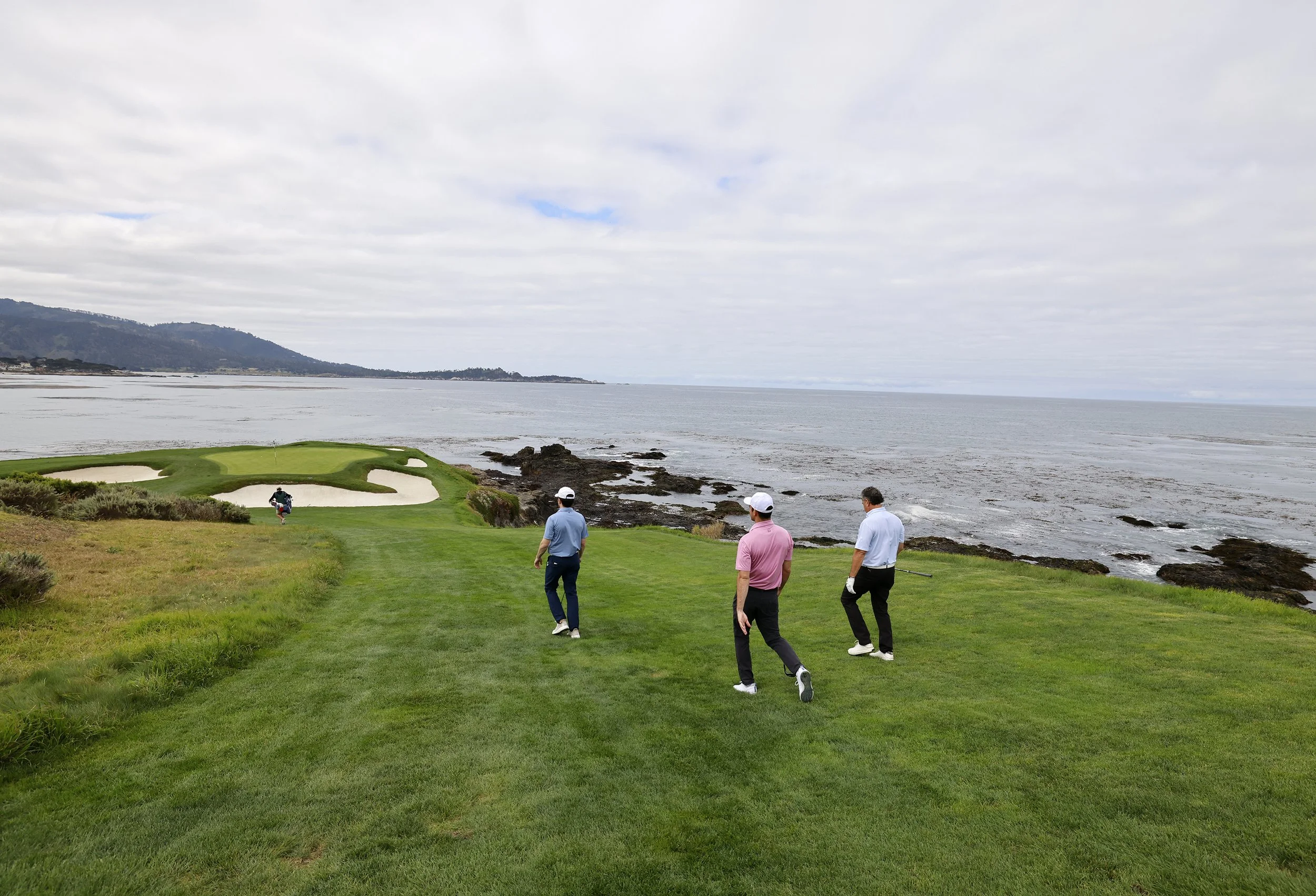
Pebble Beach Golf Links is almost entirely a coastal course. Its famous stretch of oceanside holes — running from the 4th through the 10th — hugs the cliffs above Carmel Bay with the Pacific visible on almost every tee shot. The 7th hole (106 yards, all carry over the ocean), the 8th (a terrifying approach across an 80-foot chasm to a cliffside green), and the closing 18th (a par 5 that runs along Stillwater Cove with the ocean on the left for its entire length) are among the most photographed holes in golf.
Spyglass Hill offers a split personality — and that's what makes it so fascinating. The opening five holes play along the Pacific dunes with sweeping ocean views that rival anything at Pebble Beach. Pebble Beach's own website describes the opening at Spyglass as "arguably the best five opening holes in golf." But on the 6th tee, the course dives into the Del Monte Forest, and the next 13 holes wind through dense Monterey pines, with tree-lined fairways, elevation changes, and strategic bunkering that demand a completely different style of play.
Sports Illustrated once described Spyglass as "Pine Valley-by-the-Sea meets Augusta National" — a comparison that captures its dual character perfectly.
The Difficulty
Both courses demand precision and course management. But when PGA Tour players and golf writers debate which is tougher, the answer is almost always the same: Spyglass Hill.
The numbers back this up. Spyglass carries a slope rating of 148 to Pebble's 145 — statistically indicating a more demanding test for the average golfer. The course rating is 75.3 compared to Pebble's 74.9.
On the PGA Tour, however, the data tells a more nuanced story. Tour pros average around -1.27 to par at Spyglass versus -0.66 at Pebble Beach, suggesting professionals find Spyglass marginally easier in competition — but the real-world experience for recreational golfers is often quite different.
Here's why Spyglass plays harder for most golfers:
Narrower fairways. Pebble Beach has a relatively open layout compared to Spyglass, where the tree-lined back nine punishes any drive that misses the short grass. As 2020 AT&T champion Nick Taylor put it, Spyglass is "probably tighter off the tee."
More elevation change. The terrain at Spyglass rises and falls dramatically through the Del Monte Forest, creating hanging lies, blind approach shots, and approach distances that are consistently harder to judge than the yardage suggests. The 2nd hole, for example, typically plays a full club longer than its listed distance.
Smaller, faster greens at Pebble; trickier greens at Spyglass. Pebble Beach is famous for its tiny putting surfaces — the smallest on the PGA Tour at an average of 3,500 square feet. Spyglass greens are larger but severely contoured, with multiple tiers, false fronts, and subtle breaks that can make putting genuinely confounding. As Jon Rahm observed, Spyglass "gets a little narrow, you have trees in the way, and you have very undulated greens with small areas to put the pins."
The 8th hole at Spyglass. Widely regarded as the hardest hole on the course, this par 4 doesn't even reach 400 yards — but it plays uphill with a reverse camber fairway producing hanging lies into an elevated green with a severe false front. "Wags insist it's the world's longest hole of less than 400 yards," according to Pebble Beach Resorts' own course notes.
The Photography Opportunity
From a photography standpoint, both courses are extraordinary — but in very different ways.
Pebble Beach Golf Links offers the most dramatic seascape photography in American golf. The 7th hole looking down to the ocean, the 8th approach across the chasm, and the final walk up 18 with Stillwater Cove at your back are iconic images that every golf photographer should have in their portfolio. The light on the Monterey Peninsula in the morning — soft, coastal, and often filtered through fog — is spectacular.
Spyglass Hill rewards the photographer who looks for detail and texture. The opening holes through the dunes offer sweeping panoramic shots with Cypress Point and Monterey Bay in the background. The back nine through the Del Monte Forest creates intimate, shadowed compositions that look nothing like any other golf course.
If you're visiting the Monterey Peninsula, Tee Time Photos has a full photography guide to both courses — the best spots, the best times of day, and the gear recommendations that will help you capture every moment.
The Cost and Access
Pebble Beach Golf Links is the more expensive and more exclusive of the two. Green fees run approximately $675 and above depending on the season, and while the course is technically public, guests staying at The Lodge at Pebble Beach, Casa Palmero, or The Inn at Spanish Bay receive booking priority and earlier access windows. Non-resort guests can access tee times, but availability is limited and books out months in advance.
Spyglass Hill is more accessible. Green fees run approximately $525, and unlike Pebble Beach, you can book a tee time at Spyglass up to three months in advance without staying at the resort — though resort guests have the cart fee waived. It's still a premium experience, but it's the more attainable of the two for golfers visiting the Monterey Peninsula.
Which Course Should You Play?
The honest answer: play both if you can.
But if you have to choose, here's how to think about it:
Play Pebble Beach Golf Links if: You want the bucket-list experience, the iconic views, the history, and the bragging rights. If your trip to Monterey is a once-in-a-lifetime visit and you can only play one course, Pebble Beach is the one. Nothing in American public golf matches walking those oceanside holes.
Play Spyglass Hill if: You're a serious golfer who wants to be tested. If you've already played Pebble Beach and want a different kind of challenge, Spyglass will punish imprecision in ways Pebble Beach doesn't. Many accomplished golfers come away rating Spyglass their personal favorite.
Play both if you can afford it and have the time. Playing Pebble one day and Spyglass the next is how you fully understand the breadth of what Pebble Beach Resorts has to offer — two extraordinary courses that couldn't be more different from one another.
And whichever course you play, don't forget to document it. A round at Pebble Beach or Spyglass Hill is one of those experiences that deserves to be remembered properly.
Frequently Asked Questions
Is Spyglass Hill harder than Pebble Beach?
For most recreational golfers, yes. Spyglass Hill has a higher slope rating (148 vs. 145) and its tree-lined back nine punishes errant tee shots in ways Pebble Beach's more open layout doesn't. Most golf instructors and Tour pros agree that Spyglass demands more precision.
Do I have to stay at the resort to play Spyglass Hill?
No. Unlike Pebble Beach Golf Links, you can book a tee time at Spyglass Hill up to three months in advance without a resort stay. You will need to pay a $50 cart fee unless you're staying at one of the Pebble Beach properties.
Can I walk Pebble Beach Golf Links?
Yes, and many golfers prefer it. Pebble Beach is very walkable. Spyglass Hill is hillier and harder to walk, though it's doable.
Which course is better for photography?
Both are spectacular. Pebble Beach offers more dramatic oceanside compositions; Spyglass offers more varied terrain and intimate forest shots. For a full photography guide to the Monterey Peninsula's best courses, visit www.TeeTimePhotos.com.
When is the best time to play?
Morning tee times generally offer the best conditions — calmer winds and softer light for photography. At Spyglass, the fog can be thick early, so some golfers prefer to tee off after 11 AM on foggy days. At Pebble Beach, early morning light on the oceanside holes is hard to beat.
TeeTimePhotos.com helps golfers plan tee times and capture their most memorable rounds through professional golf photography. Browse our Monterey Peninsula gallery or start planning your Pebble Beach trip at TeeTimePhotos.com
Pebble Beach, Spyglass Hill, Monterey Peninsula, California Golf, Golf Travel, Course Comparison, AT&T Pebble Beach Pro-Am, Golf Photography, Public Golf Courses, Bucket List Golf