
What Makes Pebble Beach Golf Links So Famous? The Story Behind Golf's Most Legendary Course
By TeeTimePhotos.com | Professional On-Course Photography at Pebble Beach Golf Links
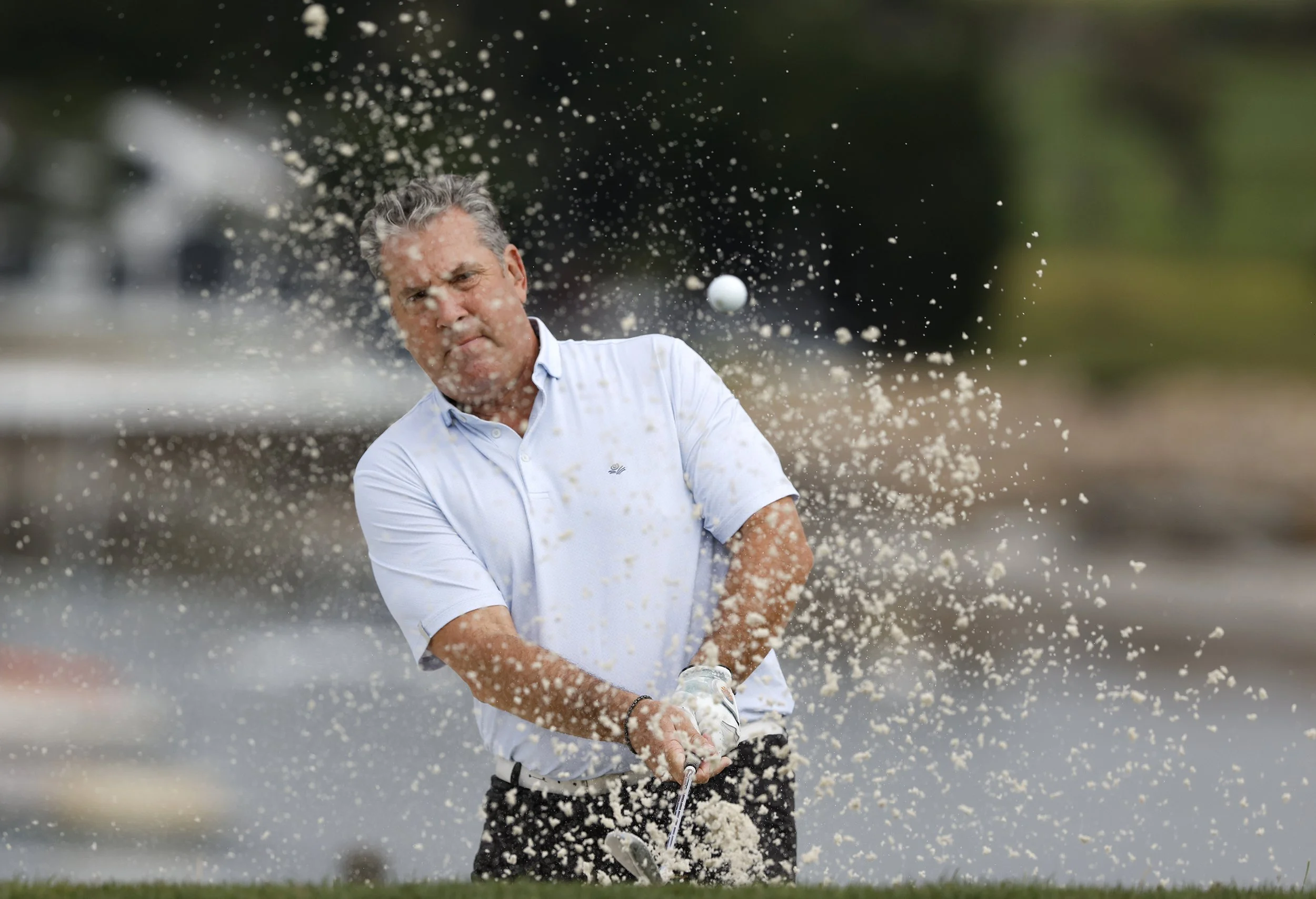
There are golf courses. There are great golf courses. And then there is Pebble Beach Golf Links.
Since opening on February 22, 1919, Pebble Beach has occupied a category entirely its own — unanimously rated the No. 1 public golf course in America by Golf Digest every year since rankings began in 2003, host to six U.S. Open Championships, and the bucket-list destination for golfers from every corner of the world. Walk those fairways once and you understand immediately why. Here is the complete story of what makes Pebble Beach Golf Links so famous — and why playing it deserves to be captured properly.
It Started With a Vision, Not Just a Golf Course
The story of Pebble Beach Golf Links begins not with a golf architect, but with a real estate problem.
In the early part of the 20th century, Samuel F.B. Morse was tasked with making the Pebble Beach area an attractive real estate investment. His solution was audacious: commission a one-of-a-kind golf course of unsurpassed beauty that would put this stretch of California coastline on the map permanently.
He chose two champion amateur golfers — Jack Neville and Douglas Grant — to design it, giving them a single guiding instruction: place as many holes as possible along the rugged Monterey coastline. They succeeded spectacularly.
<cite index="34-1">Jack Neville and Douglas Grant designed Pebble Beach Golf Links in 1919 with one objective: place as many holes as possible along the rugged Monterey coastline. They succeeded spectacularly, creating a figure-eight layout that delivers some of golf's most breathtaking and challenging holes.</cite>
The result is a course that doesn't impose on nature — it follows it. Forested corridors of Monterey cypress give way to dramatic cliffside holes along the Pacific. <cite index="40-1">Playing at 6,972 yards as a par 72, Pebble Beach doesn't rely on sheer length to challenge players. Instead, narrow fairways, small Poa annua greens, and constantly shifting coastal winds demand precision.</cite>
That philosophy — beauty married to challenge, without brute force — is what separates Pebble Beach from every other great course in the world.
The Holes That Made History
Hole 7: The Most Famous Par 3 on Earth
<cite index="34-1">The Pacific Ocean, Stillwater Cove, and Carmel Bay directly impact play on nine holes, primarily along the dramatic cliffs on holes 4 through 10, plus the finishing 17th and 18th. The most critical water-involved holes are the par-3 7th perched on the cliff edge, the par-4 8th, where the second shot plays over the beach, and the iconic closing stretch at 17 and 18, where the ocean defines every shot.</cite>
At just 109 yards, the 7th is one of the shortest holes in championship golf — and one of the most psychologically complex. The green sits on a rocky promontory surrounded on three sides by the Pacific. On calm days, it plays to a sand wedge. When the wind howls off the ocean, Tour professionals have reached for mid-irons. It is the most photographed hole in golf and the one every visitor wants to capture.
Hole 8: Jack Nicklaus' Favorite Approach Shot in Golf
The 8th at Pebble Beach is the hole that stops conversations. The approach shot must carry a dramatic ocean chasm — a rocky cove dropping to Carmel Beach far below — to reach a green perched above the water. Jack Nicklaus has called this his single favorite approach shot in all of golf. That endorsement alone tells you everything.
Holes 17 and 18: Where Legends Are Made
The final two holes at Pebble Beach are where golf history has been written, erased, and rewritten more times than any other finishing stretch in the sport. The hourglass-shaped 17th green — where Nicklaus hit the flag with a 1-iron and Watson chipped in — plays a starring role in more U.S. Open drama than any hole in the game. <cite index="37-1">This iconic hourglass-shaped green can play 15 yards longer or shorter depending on the pin placement. The traditional Sunday U.S. Open hole location is back-left, where Jack Nicklaus famously hit the flag with a 1-iron and Tom Watson chipped in.</cite>
The 18th hole runs the entire length of Stillwater Cove, with the Pacific on your left from tee to green. <cite index="37-1">It's the most famous finishing hole in golf.</cite> Walking up that fairway — knowing what has been decided here over a century of competition — is unlike any experience in golf.
The Championship Legacy
No public golf course in the world has hosted more major championship history than Pebble Beach Golf Links.
<cite index="34-1">Pebble Beach has hosted six U.S. Opens and one PGA Championship, with another U.S. Open scheduled for 2027. The course will host the U.S. Open again in 2032, 2037 and 2044, plus the U.S. Women's Open in 2035, 2040 and 2048.</cite>
That is an extraordinary commitment from the USGA — and a testament to what this course means to the sport. No venue in modern major championship golf has been selected to host more future championships.
The moments those championships have produced are burned into golf consciousness:
1972 — Nicklaus wins his 13th major: Jack Nicklaus arrived at Pebble Beach having already won 12 major championships. <cite index="34-1">The 1972 U.S. Open saw Nicklaus secure his 12th major with that famous 1-iron on the 17th hole.</cite> He hit the flag. He won by three shots. It remains one of the most iconic single swings in golf history.
1982 — Watson's chip heard around the world: Tom Watson stood in thick rough just off the 17th green, needing a birdie to beat Nicklaus and win the U.S. Open. <cite index="36-1">From thick rough, above the hole, with the tournament hanging in the balance, Watson struck a chip that danced once, twice, and then dropped — dead centre. "I told you I was going to sink it," he would say to his caddie. He went on to birdie the 18th and win by two. It remains one of the most iconic moments in major championship golf.</cite>
2000 — Tiger Woods rewrites history: In what many consider the greatest performance in major championship history, Tiger Woods won the 2000 U.S. Open at Pebble Beach by a margin that still seems impossible. <cite index="34-1">Tiger Woods' performance at Pebble Beach in 2000 remains unmatched. He shot 65-69-71-67 to finish at 272, 12 under par, winning by 15 shots. It remains the largest margin of victory in major championship history.</cite>
These moments didn't happen at Pebble Beach by accident. They happened here because this course demands and rewards greatness in equal measure.
What Makes the Course Technically Unique
Beyond the scenery and the history, Pebble Beach presents a genuinely distinctive championship test.
<cite index="34-1">The greens are pure Poa annua, cut to .125 inches and averaging just 3,500 square feet. Those are the smallest greens on tour, giving players minimal margin for error. The course also features 116 bunkers, the third-most on tour behind only Oakmont's 168 and Philadelphia Cricket Club's 118.</cite>
Think about that: some of the smallest greens and one of the densest bunker fields in major championship golf, positioned on a coastal site where wind and fog change the equation on virtually every hole. <cite index="34-1">Pebble Beach proves that great golf doesn't require 7,500 yards. At under 7,000 yards with the smallest greens on tour, it demands precision over power.</cite>
This is why Tour professionals who overpower virtually every course they play still find Pebble Beach humbling. And it's why the average golfer, playing from far shorter tees, still finds the course endlessly challenging and rewarding.
The AT&T Pebble Beach Pro-Am: Celebrity, Competition, and Tradition
Pebble Beach's fame extends beyond its championship history to one of the most beloved weeks in professional golf: the AT&T Pebble Beach Pro-Am.
The tournament traces its roots to Bing Crosby, who began gathering friends for informal competition at Pebble Beach in the 1930s — a gathering that became known as The Crosby Clambake and eventually evolved into one of the PGA Tour's signature annual events. The unique pro-am format, where Tour professionals are paired with celebrities and top amateurs, gives Pebble Beach a different energy than any other week in golf. Every February, the world's attention turns to these fairways.
The tournament is also one of professional golf's most philanthropically significant events. The Monterey Peninsula Foundation, which manages the Pro-Am's charitable proceeds, has surpassed $250 million in lifetime giving — distributing funds to over 200 nonprofits across the Central Coast region.
The Lone Cypress: Golf's Most Recognizable Symbol
You cannot tell the story of Pebble Beach Golf Links without the Lone Cypress — the solitary Monterey cypress tree clinging to a granite outcropping above the Pacific along 17-Mile Drive that has become the official symbol of Pebble Beach Resorts and one of the most photographed trees in the world.
Estimated to be over 250 years old, the Lone Cypress has stood through countless Pacific storms, major championships, and a century of change on the Monterey Peninsula. It appears on every Pebble Beach logo, every piece of official merchandise, and in the background of photographs taken by golfers completing their rounds for over 100 years.
It is, in the truest sense, the icon of an iconic place.
Why Pebble Beach Is Still the Greatest Walk in Golf
<cite index="38-1">The best walk in golf is meant to be that — walked. When you play Pebble Beach Golf Links, it is our recommendation that you do so with a caddie. The course knowledge and camaraderie our caddies provide only add to your bucket-list round of golf.</cite>
There is a reason Pebble Beach Resorts calls this the greatest walk in golf, and it's not marketing copy. Walking from the first tee through the cypress-lined opening holes, feeling the course open up as the Pacific comes into view on the 6th, standing on the 7th tee for the first time, navigating the drama of the 8th approach, and finally walking up the 18th fairway with Stillwater Cove on your left — it is a complete, singular experience that no photograph fully conveys and no description adequately prepares you for.
Which is exactly why what you do with that experience matters.
Why You Need a Professional Photographer at Pebble Beach
Here is the truth most golfers discover too late: the investment in getting to Pebble Beach Golf Links — the flights, the lodging, the green fee approaching $700, the time away from work and family — dwarfs the cost of making sure that round is captured properly.
And yet, most golfers hand their iPhone to a playing partner and hope for the best.
The problem is that Pebble Beach doesn't photograph like a normal golf course. The dynamic range between the Pacific sky, the dark cypress shadows, and the glittering ocean is extreme. The key moments happen fast — the tee shot on 7, the approach on 8, the walk up 18 — and they only happen once. A playing partner focused on their own game is not going to be in the right position at the right moment with the right light.
That's where TeeTimePhotos.com comes in.
With 20 years photographing golfers at Pebble Beach Golf Links and across the Monterey Peninsula, our professional photo caddies know this course the way a great caddie knows the greens. We know that the 7th tee photographs best from the lower-left position in morning light. We know where to stand on the 8th to capture the approach with the ocean chasm in frame. We know that the walk up the 18th fairway, captured from behind with Stillwater Cove in the background, is the photograph every Pebble Beach golfer wants and almost nobody gets.
We also know how to be completely unobtrusive. You focus on your round. We focus on capturing it. Most clients say they forgot we were there — until they saw the gallery.
When you've spent a lifetime dreaming about playing Pebble Beach, and years planning and saving for the trip, the additional investment in a professional photo caddie from TeeTimePhotos.com is the smallest line item in your budget and the one you'll be most grateful for.
Think about what these moments are worth to you looking back in 10 or 20 years — the swing on the 7th tee, the celebration after a birdie on 18, the group photo on the famous green with the Pacific behind you. Those are the images that go on walls. Those are the images that get passed down.
Book your Pebble Beach professional photography session at TeeTimePhotos.com →
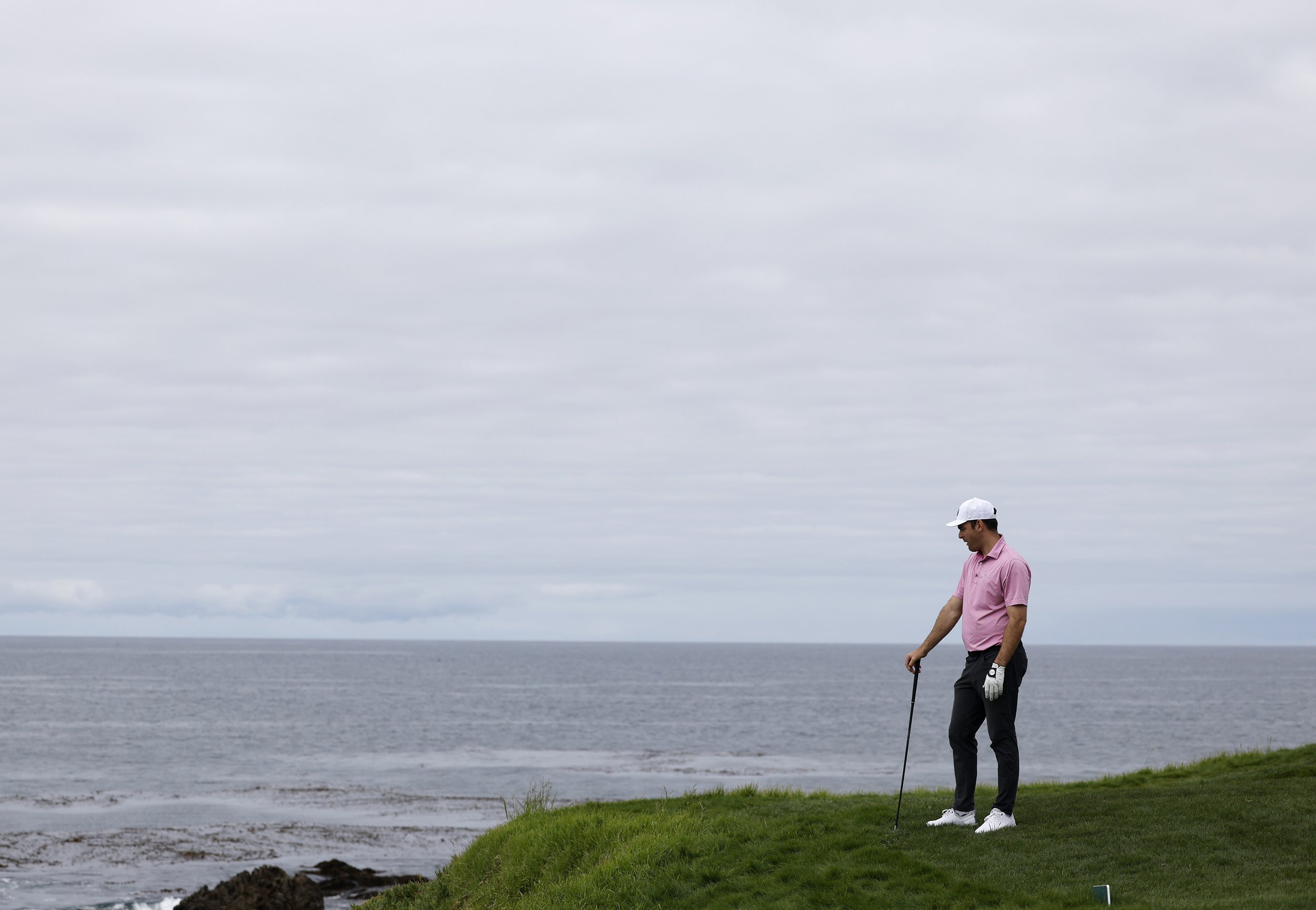
Further Reading
Pebble Beach Golf Links — Official Site — course details, history, and reservations
Pebble Beach Historic Timeline — 100+ years of championship history
AT&T Pebble Beach Pro-Am — Official Site — tournament schedule and tickets
Pebble Beach Golf Links — Wikipedia — comprehensive course history
TeeTimePhotos.com — Book Your Photo Caddie — professional golf photography at Pebble Beach
TeeTimePhotos.com | Professional On-Course Photography | Pebble Beach Golf Links, Spyglass Hill & the Monterey Peninsula