
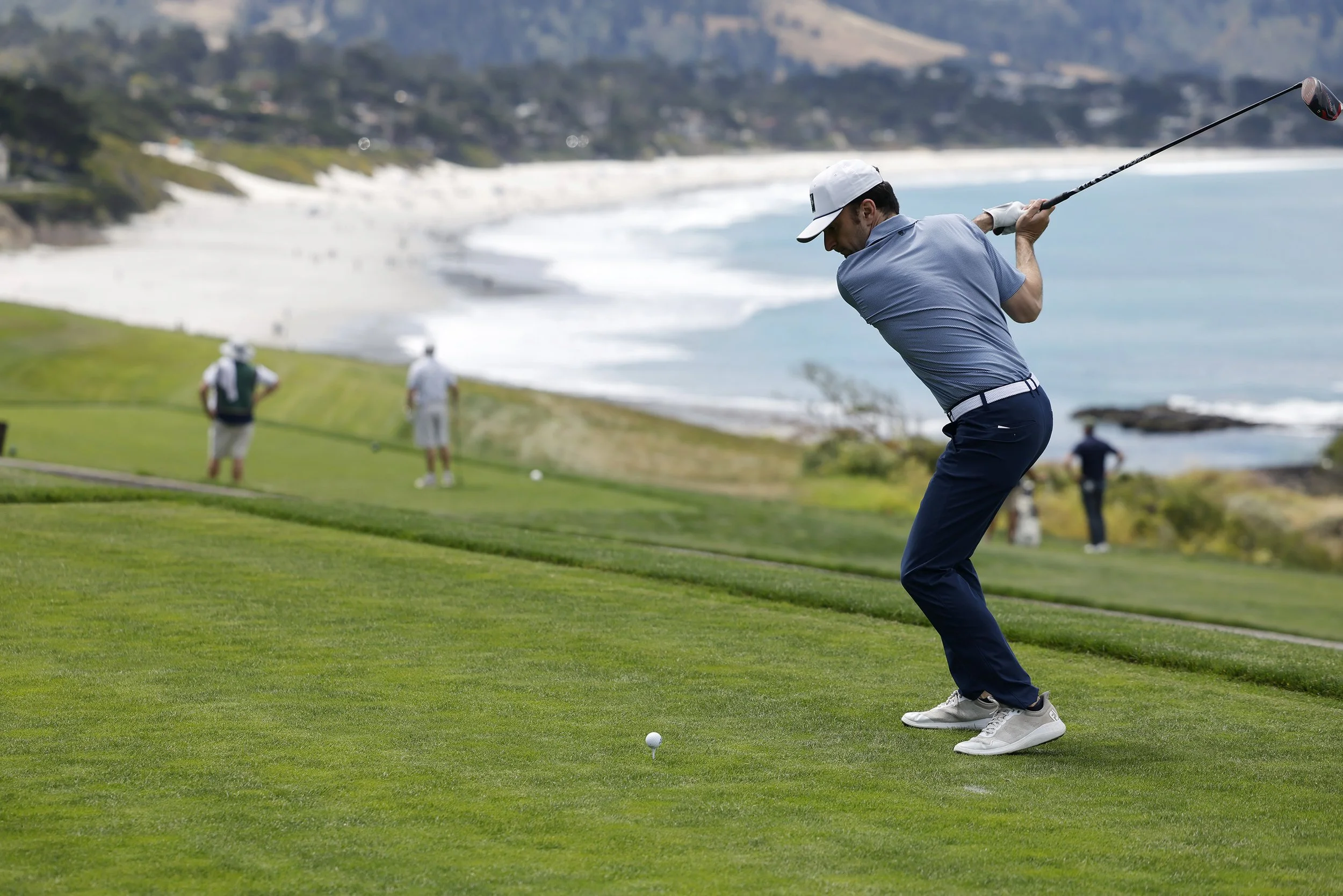
For many golfers, Pebble Beach Golf Links isn't just a course to play — it's the answer to "if you could play one course before you die, what would it be?" Perched on the edge of Carmel Bay on California's Monterey Peninsula, it's one of the rare courses that's both a regular stop on the PGA Tour and open to any golfer willing to plan — and pay — for a round.
This past February, Collin Morikawa reminded the golf world exactly why the course carries that reputation. He closed out the 2026 AT&T Pebble Beach Pro-Am at 22-under par, birdieing three of his last four holes, including the par-5 18th, to edge Min Woo Lee by a single shot. It was his first PGA Tour win in more than two years — and it happened on the same fairways and greens that public golfers walk every day.
If Pebble Beach is on your bucket list, here's what you actually need to know: what it costs, how to book a tee time, which holes to prepare for, and how to make sure you don't come home with nothing but a scorecard to prove you were there.
A Course With More Than a Century of History
Pebble Beach Golf Links opened in 1919, designed by Jack Neville and Douglas Grant — both amateur golfers rather than professional architects, which is part of what makes the routing feel so natural. Instead of imposing a layout on the land, they largely let the coastline dictate the holes, tracing the cliffs and inlets of Carmel Bay rather than building around them.
That approach is a big reason the course has aged so well. Pebble Beach has hosted 15 major championships, including the U.S. Open in 2019 and the U.S. Women's Open in 2023, and it's already scheduled to host U.S. Opens again in 2027, 2032, 2037, and 2044. It's also the permanent home of the AT&T Pebble Beach Pro-Am, which pairs PGA Tour pros with celebrities and amateurs every February and has raised money for Monterey Peninsula nonprofits since 1947.
The Holes That Made Pebble Beach Famous
You don't need a scorecard to recognize Pebble Beach's back nine—golf fans have watched it on TV for decades. A few holes worth knowing before you tee off:
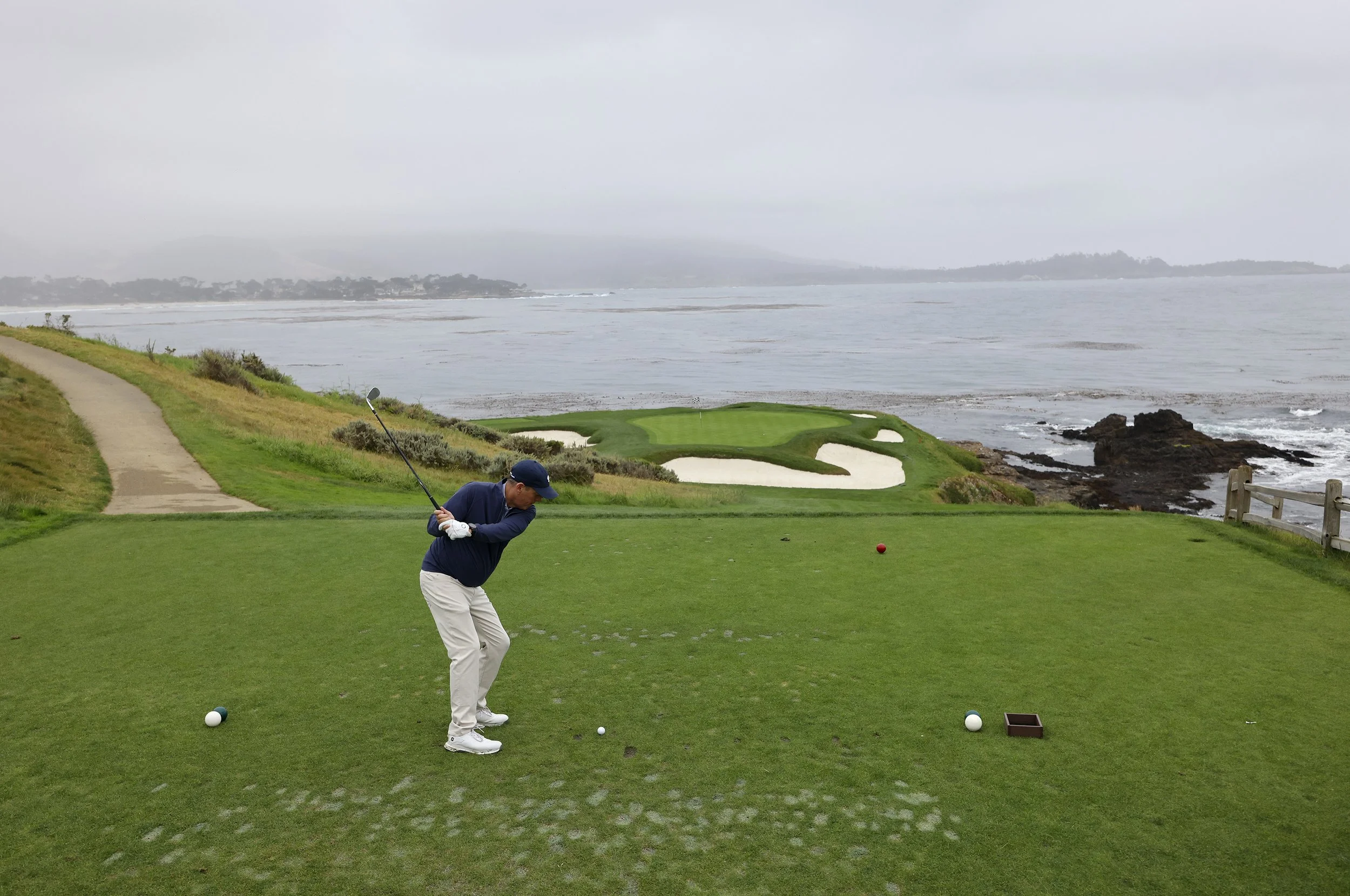
Hole 7 – The shortest hole on the course, playing well under 110 yards from an elevated tee straight down to a green perched on the rocks above the Pacific. Short doesn't mean easy; ocean wind turns this into one of the most talked-about par 3s in golf.
Hole 8 – A blind second shot over a ravine and cliff edge, widely considered one of the best approach shots in golf.
Hole 17 – A long par 3 that plays over an inlet to a green guarded on nearly every side, the stage for some of the U.S. Open's most memorable moments.
Hole 18 – The signature closer: a par 5 that hugs Carmel Bay for its entire length, finishing on a green right in front of The Lodge at Pebble Beach.
None of these holes are especially long by modern standards. What makes them hard is the wind, the small greens, and the fact that a mis-hit shot can end up in the ocean rather than the rough.
How Much Does It Cost to Play Pebble Beach in 2026?
Pebble Beach isn't a course you play on a whim, budget-wise. As of April 2026, the green fee sits at $695 per player. Add a cart fee — roughly $55–60 for non-resort guests, often included for resort guests — and you're comfortably past $700 before caddies, food, or tips.
If you want a caddie, and on a course this dependent on reading wind and slope most golfers do, expect to pay around $155 for a single bag, $210 to share a caddie between two players, or about $52.50 per player for a forecaddie in a group of three or more.
Rates change from year to year and occasionally mid-year, so it's worth confirming current pricing directly with Pebble Beach Resorts before you book.
How to Actually Get a Tee Time
This is the part that trips people up. Pebble Beach is public, but "public" doesn't mean "easy to book."
If you're staying at a Pebble Beach Resorts property — The Lodge at Pebble Beach or The Inn at Spanish Bay — you can reserve a tee time up to 18 months in advance, typically with a minimum two-night stay (three nights if you want a Thursday–Sunday round between September and November). Staying at Casa Palmero instead gives you a 12-month booking window.
If you're not staying on property, you can still play — you just have to be willing to gamble. Non-guest tee times open up only 24 hours before the round, based on availability. It's a real path onto the course, but landing a slot for a full foursome on such short notice is genuinely difficult; solos and twosomes have better odds.
A solid backup plan: Spyglass Hill Golf Course, part of the same Pebble Beach Resorts family and one of the two courses used in the AT&T Pro-Am, can be booked up to three months in advance regardless of where you're staying. Plenty of golfers lock in Spyglass Hill first, then try their luck at Pebble Beach closer to the date.
Tips Before You Tee Off
Book the caddie when you book the tee time. Slots fill fast, and a caddie who knows the greens is worth it on a course this demanding.
Watch the calendar for fog. Morning fog is common from May through July; September through November tends to offer the clearest views and best visibility.
Dress for wind, not just weather. Even on a warm, sunny day, ocean wind can make the back nine feel ten degrees colder. Bring a real layer, not just a light jacket.
Give yourself time. Between the pace of play and the scenery you'll want to stop and take in, plan on five-plus hours on the course.
Capture the Round, Not Just the Score
Here's the thing about Pebble Beach: you'll remember the round for the rest of your life, but your own phone photos rarely do it justice — especially when you're the one trying to hit a good shot on 17 while also fumbling for your camera.
That's the gap Tee Time Photos fills. They run a professional photo caddie service on the Monterey Peninsula, walking the course alongside your group to capture the round — from a booming tee shot on 18 to the quieter moments with your playing partners — without you ever having to hand your phone to a stranger for a rushed shot. Their portfolio is worth a look before you book, so you know exactly what to expect. On a course as photogenic as Pebble Beach, it's the difference between a handful of blurry shots and photos you'll actually want printed and framed.
Frequently Asked Questions
Is Pebble Beach Golf Links open to the public? Yes. Unlike many of the world's top-ranked courses, Pebble Beach doesn't require a membership — anyone can book a tee time, either as a resort guest or through the 24-hour non-guest window.
How much does it cost to play Pebble Beach? As of April 2026, the green fee is $695 per player, plus a cart fee for non-resort guests and optional caddie fees.
How far in advance can I book a tee time? Resort guests can book up to 18 months ahead (12 months for Casa Palmero guests). Non-resort guests can only book within 24 hours of their tee time.
What's the best time of year to play? September through November generally offers the clearest weather and least fog, though it's also popular, so book early.
Final Thoughts
Pebble Beach Golf Links earns its reputation the old-fashioned way — with a routing that's barely changed in over a hundred years and a coastline no architect could improve on. Whether you're building a resort stay around your tee time or rolling the dice on a last-minute slot, a round here is worth the planning it takes to get one. Just make sure you've got a plan to capture it, because you'll want proof this wasn't just a very good dream.