
Playing Golf at Pebble Beach and Spyglass Hill: The Ultimate Monterey Peninsula Bucket-List Round

If there's one golf trip every serious player dreams about, it's teeing it up on the Monterey Peninsula. Two courses anchor that dream: Pebble Beach Golf Links and Spyglass Hill Golf Course. Between them, you get oceanfront cliffs, wind-bent pines, and some of the most photographed holes in the sport. Here's what you need to know to plan the round of a lifetime — and how to make sure you actually remember it.
Pebble Beach Golf Links: Golf's Most Famous Address
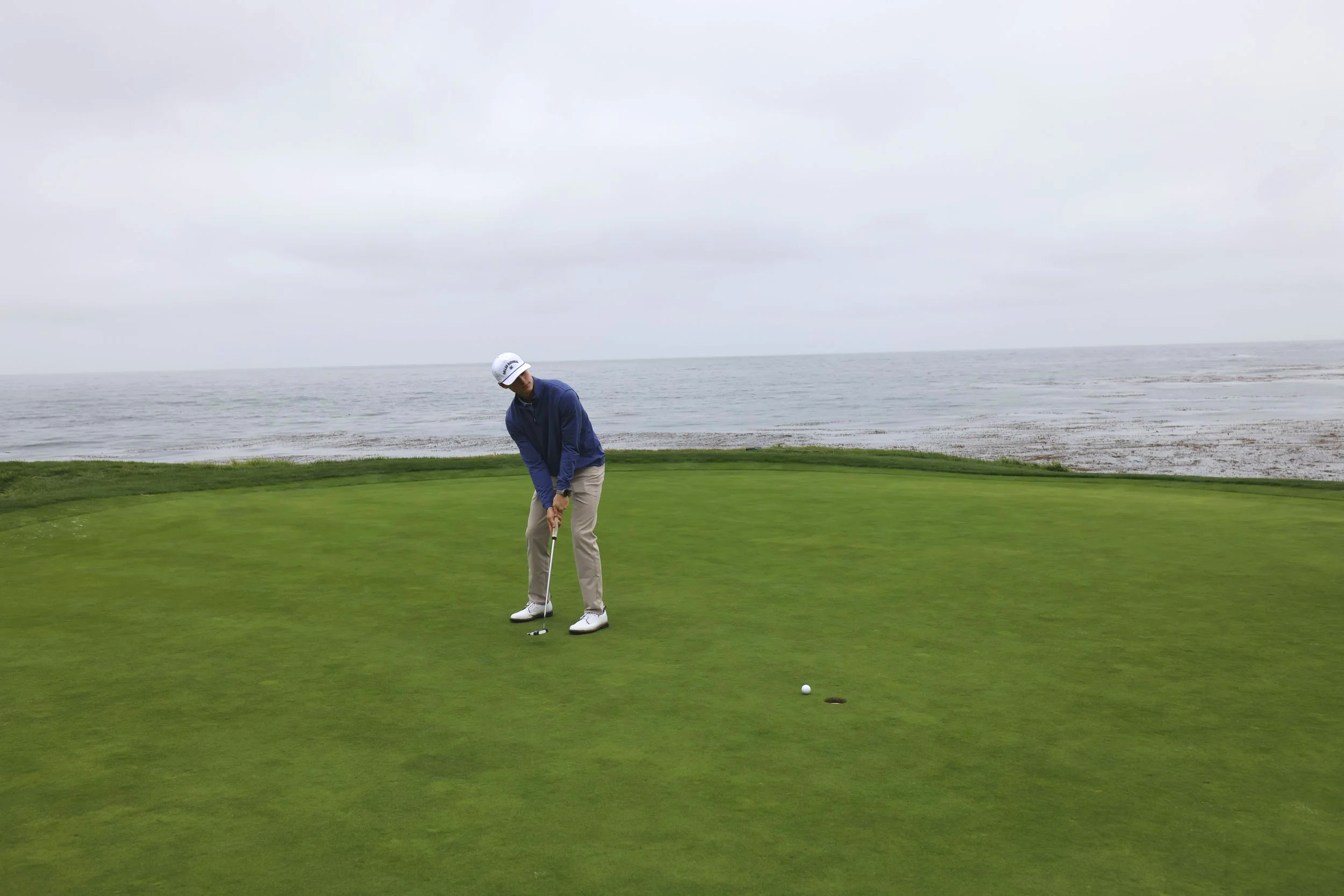
Pebble Beach Golf Links has hosted six U.S. Opens, and it's the annual home of the AT&T Pebble Beach Pro-Am. The par-72 layout runs along Carmel Bay, with the par-4 7th, par-5 18th, and the cliffside stretch from holes 4 through 10 forming one of the most dramatic finishing sequences anywhere in golf.
What it costs: Green fees currently sit at $675 per player, rising to $695 starting April 1, 2026, plus a per-player cart fee. Booking rules favor resort guests heavily — staying at The Lodge at Pebble Beach, The Inn at Spanish Bay, or Casa Palmero (typically a two- or three-night minimum) lets you reserve a tee time well in advance. Non-resort guests are generally limited to booking within 24–48 hours of their round, so flexibility and patience matter if you're not staying on property.
Tips for playing well:
The wind off Carmel Bay changes club selection more than the yardage book suggests — take an extra club into the coastal holes.
Approach shots into the smaller, firm greens (especially 8, 9, and 10) reward flighted shots that land short and release.
Budget extra time on the range and practice green beforehand; the first tee at Pebble is not the place to work out a slow start.
Spyglass Hill: The Course Many Pros Call Tougher Than Pebble
Designed by Robert Trent Jones Sr. and named for Robert Louis Stevenson's Treasure Island, Spyglass Hill opened in 1966 and has been part of the AT&T Pebble Beach Pro-Am rotation ever since. Many Tour players consider it the hardest test of the week — tougher, even, than Pebble Beach itself.
The front nine winds through coastal dunes with wide-open, wind-exposed holes, while the back thirteen (yes, the routing is unusual) plunges into thick Monterey pine forest, demanding accuracy over power. The course carries a 75.5 rating and 147 slope from the tips — numbers that back up its reputation.
What it costs: Green fees run roughly in the $495–$525 range depending on season, plus a cart fee for non-resort guests (waived if you're staying at one of the Pebble Beach Resorts properties). Unlike Pebble Beach Golf Links, you don't need to be a resort guest to book — tee times open up to three months in advance for everyone.
Tips for playing well:
Club down off the tee on the front nine holes that hug the dunes; accuracy beats distance here.
The transition into the pines (starting around hole 6) plays noticeably shorter due to the shelter from wind — don't be fooled by the scorecard.
Spyglass's greens are some of the toughest to read on the Peninsula; take extra time on the practice green to dial in your feel before you start.
Building the Perfect Two-Course Trip
Most golf trips to the Peninsula combine both courses, often with Spanish Bay or Del Monte thrown in for good measure. A smart itinerary looks something like this:
Day 1: Arrive, settle in, play Spyglass Hill in the afternoon to shake off travel legs.
Day 2: Pebble Beach Golf Links, ideally an early tee time to catch the morning light rolling off the bay.
Day 3: A relaxed final round or a spa day, with time set aside to walk 17-Mile Drive and take in the Lone Cypress.
Don't Let the Round Disappear Into Memory
Here's the thing nobody tells you before you play Pebble Beach or Spyglass Hill: the round goes by fast, and most golfers end up with nothing but a scorecard and a few blurry phone shots to show for it. Given what you're paying to play these courses, that's a shame.
That's exactly the gap TeeTimePhotos.com fills. Instead of relying on a playing partner's phone, you can arrange professional, course-specific photography that captures your group on the tee boxes and greens that make Pebble Beach and Spyglass Hill iconic — the kind of images worth framing, not just posting.
A few ways golfers are using the service to round out a Peninsula trip:
Book ahead of your tee time. Check TeeTimePhotos.com before your trip so a photographer can be positioned at marquee holes like Pebble's 7th and 18th, or Spyglass's dune-lined opening stretch.
Capture the whole group, not just the swing. Group shots at the Pebble Beach clubhouse or the Spyglass sign are the images people actually want years later.
Pair photos with your scorecard. A framed photo next to your signed card from the round makes for one of the best souvenirs a golf trip can produce.
If you're already planning tee times at Pebble Beach or Spyglass Hill, it's worth building a stop at TeeTimePhotos.cominto your pre-trip checklist right alongside your caddie request and dinner reservations.
Final Thoughts
Pebble Beach and Spyglass Hill aren't just two golf courses — they're a genuine bucket-list experience that combines history, difficulty, and coastal scenery you won't find anywhere else. Book early, prepare for the cost, and make sure you walk away with more than just a scorecard. Between the golf and a few well-timed photos from TeeTimePhotos.com, you'll have a trip worth talking about for years.
Green fees and booking policies are subject to change; confirm current rates and tee time availability directly with Pebble Beach Resorts before planning your trip.