
When golfers around the world dream about their ultimate round of golf, one name consistently rises above all others: Pebble Beach Golf Links. Perched dramatically along California's rugged Monterey Peninsula coastline, this legendary course represents the gold standard of American golf—a breathtaking masterpiece where championship pedigree meets unparalleled natural beauty.
Unlike many of the world's greatest courses that remain hidden behind exclusive membership gates, Pebble Beach Golf Links stands as a democratic treasure. It's a public course, meaning that any golfer with proper planning and resources can walk the same fairways where Jack Nicklaus, Tiger Woods, and Tom Watson created golfing history. This accessibility, combined with its stunning coastal setting and rich tournament heritage, has elevated Pebble Beach to legendary status in the golf world.
In this comprehensive guide, we'll explore everything that makes Pebble Beach Golf Links special—from its fascinating history and iconic hole designs to practical advice for planning your visit. Whether you're already counting down the days until your tee time or still dreaming of making this pilgrimage someday, understanding what awaits at Pebble Beach will help you appreciate why this course holds such a revered place in golf's pantheon.
The Rich History of Pebble Beach Golf Links
The story of Pebble Beach Golf Links begins in 1919, when Samuel F.B. Morse, known as the "Duke of Del Monte," commissioned the creation of a world-class golf course along the spectacular Monterey coastline. Rather than hiring a famous architect, Morse turned to two talented amateur golfers—Jack Neville and Douglas Grant—who possessed an intimate understanding of the land and a vision for routing a course that would showcase the dramatic landscape.
Neville and Grant's amateur status proved to be an advantage rather than a limitation. Unburdened by conventional design wisdom of the era, they created a routing that maximized the property's natural drama. The result was a course that felt organic, as if the holes had always existed along these coastal cliffs, merely waiting to be discovered.
Pebble Beach opened for play on February 22, 1919, and immediately captured the imagination of golfers. The course's reputation grew steadily through its early decades, attracting prominent players and golf enthusiasts who recognized they were experiencing something truly special.
The course's championship credentials were established in 1947 when it hosted the California State Amateur Championship. However, it was the 1961 U.S. Amateur Championship—won by Jack Nicklaus in a thrilling finish—that truly announced Pebble Beach as a venue worthy of golf's most prestigious events.
Since then, Pebble Beach has hosted six U.S. Opens (1972, 1982, 1992, 2000, 2010, and 2019), five U.S. Amateur Championships, and numerous PGA Championships. The course has also been home to the AT&T Pebble Beach Pro-Am (formerly the Bing Crosby National Pro-Am) since 1947, introducing millions of television viewers to its spectacular seaside holes each February.
Each major championship has added to Pebble Beach's lore. Nicklaus's famous 1-iron on the par-3 17th in 1972, Watson's miracle chip-in on the same hole in 1982, and Tiger Woods's record-setting 15-stroke victory in 2000 are just a few of the legendary moments that have unfolded on these fairways.
What Makes Pebble Beach Golf Links Special
The Unparalleled Setting
The first thing that strikes visitors about Pebble Beach is its jaw-dropping beauty. The course occupies one of the most spectacular stretches of coastline in the world, where the Santa Lucia Mountains meet the Pacific Ocean in a collision of rock, water, and sky that has inspired artists and photographers for generations.
Eight holes play directly along the ocean, creating vistas that rank among the most photographed scenes in all of sports. The sound of waves crashing against rocky shores provides a constant soundtrack, while seals and sea otters often make appearances just beyond the fairways. On clear days, the deep blue Pacific stretches endlessly toward the horizon, while morning fog creates an ethereal atmosphere that adds mystery and drama to your round.
The coastal holes aren't merely pretty—they're also strategically brilliant, using the ocean as both a visual intimidator and a very real hazard. The integration of natural features into the strategic challenge represents course design at its finest.
Public Access to Greatness
What truly sets Pebble Beach apart from other championship venues is its status as a public course. While Augusta National, Pine Valley, and Cypress Point remain accessible only to members and their guests, Pebble Beach opens its gates to anyone willing to pay the green fee and plan accordingly.
This democratic approach to golf has made Pebble Beach a bucket-list destination for recreational golfers worldwide. The knowledge that you can play the same course—from the same tees, to the same greens—as major championship competitors creates a connection between amateur and professional golf that few other venues can match.
Every day at Pebble Beach, golfers of all skill levels experience the same challenges that test the world's best players. You'll face the same intimidating tee shot on the 8th hole, the same nerve-wracking approach to the 7th green, and the same thrilling walk down the 18th fairway. This shared experience creates a bond among golfers who have played Pebble Beach, regardless of their scores.
Championship Pedigree
Pebble Beach's reputation as a championship venue is unmatched among public courses. The USGA has returned repeatedly to Pebble Beach for its most important events because the course consistently produces compelling championship golf while testing every aspect of the game.
The course's length—approximately 6,800 yards from the championship tees—is modest by modern standards. However, what Pebble Beach lacks in pure yardage, it makes up for in strategic complexity, mental pressure, and ever-changing wind conditions. The course rewards creativity, course management, and mental fortitude over raw power.
Major championships at Pebble Beach have produced some of golf's most memorable moments, cementing the course's place in the sport's collective memory. The drama of championship Sundays at Pebble Beach, with leaderboards changing as players navigate the treacherous coastal holes, has created television moments that transcend the sport itself.
A Hole-by-Hole Journey Through Pebble Beach
Understanding the strategic and visual characteristics of Pebble Beach's most famous holes helps you appreciate what awaits and prepares you mentally for the experience.
Hole 1 – Par 4, 381 Yards
The opening hole eases you into the round with a downhill tee shot to a relatively generous fairway. However, don't be deceived—the approach plays to a small, well-bunkered green that introduces you to the precision required throughout your round. A par here builds confidence for what lies ahead.
Hole 2 – Par 5, 502 Yards
The first par 5 offers a legitimate birdie opportunity if you navigate it smartly. The hole curves gently right and plays slightly downhill. Longer hitters can reach in two, but the smart play for most golfers is laying up to a comfortable wedge distance, as the small green demands precision.
Hole 3 – Par 4, 390 Yards
This short par 4 requires accuracy more than distance. The fairway narrows at driver distance, tempting longer hitters to lay back with a fairway wood or long iron. The green is elevated and protected by bunkers, making the approach shot the key to scoring.
Hole 4 – Par 4, 381 Yards
Here begins the spectacular coastal stretch. The hole turns right toward the ocean, with the Pacific appearing dramatically along the right side. The tee shot must avoid bunkers on the left, while the approach plays to a green perched near the cliff edge. The ocean views distract from the strategic challenge—focus is essential.
Hole 5 – Par 3, 188 Yards
This downhill par 3 plays toward the ocean, with the green sitting on a small promontory. The hole is deceptively difficult, as wind, elevation, and the visual intimidation of the ocean create challenges with club selection. The green slopes significantly, making the proper miss crucial.
Hole 6 – Par 5, 523 Yards
The shortest par 5 on the course climbs uphill through a narrowing valley. The fairway tilts right toward trees and rough. The second shot tempts aggressive players to attack the elevated green, but the smart play is laying up to avoid the deep bunkers fronting the putting surface. This hole offers a prime scoring opportunity if you play strategically.
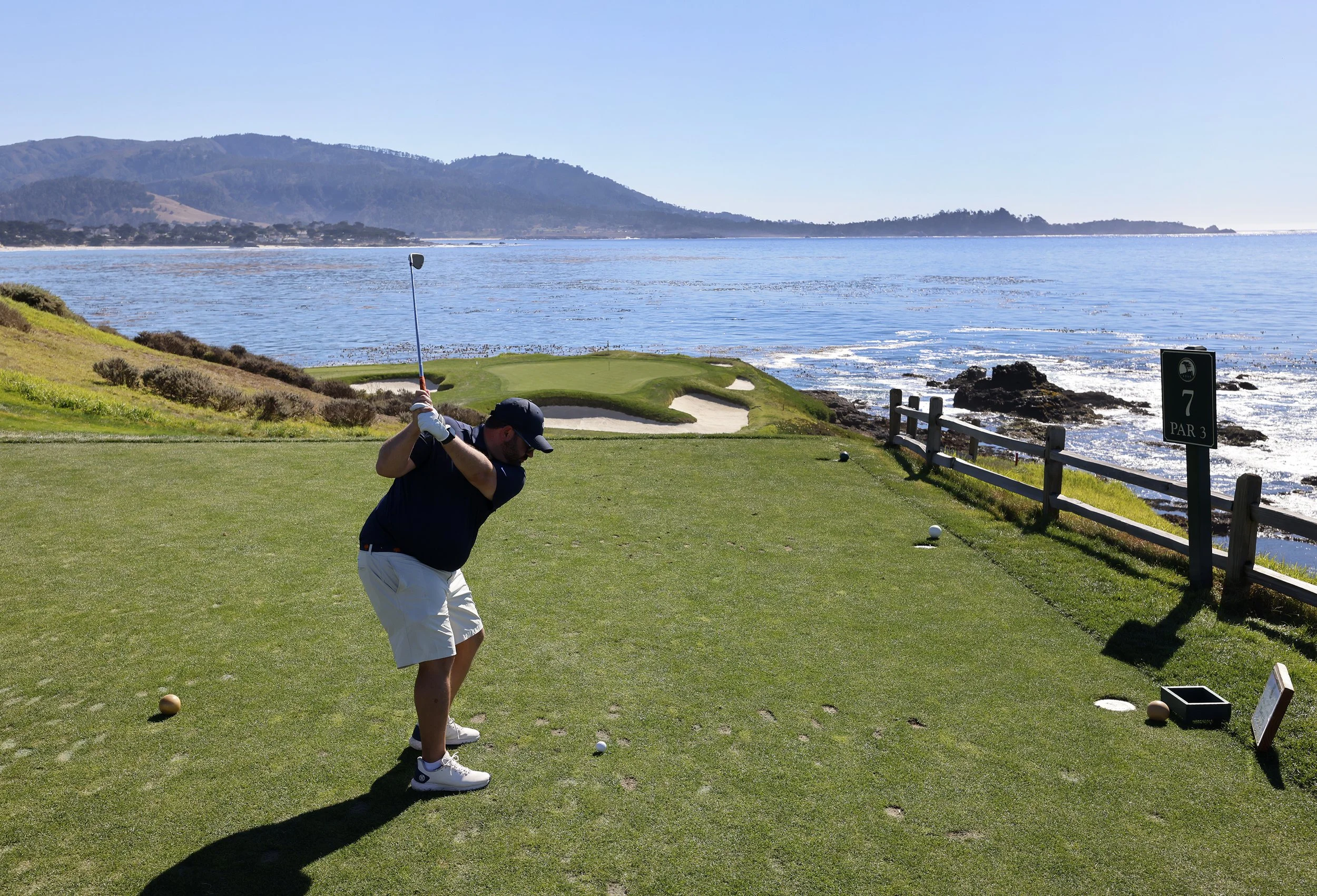
Hole 7 – Par 3, 106 Yards
The most famous hole at Pebble Beach, and perhaps the most photographed hole in all of golf. At just 106 yards, this tiny par 3 should be simple—except the green measures barely 2,000 square feet and is surrounded by ocean on three sides, with bunkers protecting the remaining area.
Wind makes club selection unpredictable. On calm days, it's a simple sand wedge. When wind howls off the Pacific, you might need as much as a 7-iron. The psychological pressure of this iconic hole, combined with genuine strategic difficulty, makes par feel like a significant accomplishment.
Take your time on the tee to soak in the view and appreciate the moment. This is bucket-list golf at its finest, where beauty and challenge combine perfectly.
Hole 8 – Par 4, 418 Yards
Many architects and players consider the 8th the finest hole at Pebble Beach. The tee shot must carry 180 yards over a rocky cove to reach the fairway, which curves right along the cliff edge. The ocean runs the entire length of the hole on the right, while the left side offers little relief.
The key is aiming at the right center of the fairway, accepting that you'll be flirting with the ocean. Playing too safely left leaves an extremely difficult angle for the approach. The second shot climbs significantly uphill to a green that slopes severely from back to front. Three-putts are common if you're above the hole.
This hole exemplifies why Pebble Beach is great—it's visually stunning, strategically complex, and mentally challenging all at once.
Hole 9 – Par 4, 466 Yards

The outward nine concludes with another dramatic cliffside hole. The tee shot must carry the ocean, with the safe play aimed well left of the rocky coastline. Longer hitters can shorten the hole by cutting more of the corner, but it's a high-risk proposition.
The fairway tilts toward the ocean, making proper distance control on the tee shot essential. The approach plays to a green sitting hard against the cliff, with ocean and bunkers awaiting errant shots. Par here feels like a birdie.
Hole 10 – Par 4, 495 Yards
After making the turn, this short par 4 offers one final birdie chance before leaving the coastline. The tee shot plays downhill with the ocean still visible on the left. The approach is relatively straightforward to a generous green. Take advantage of this scoring opportunity—the back nine contains several challenging holes.
Hole 11 – Par 4, 390 Yards
The course moves inland through a more tree-lined setting. This dogleg left requires a precisely positioned drive to set up the ideal approach angle. The green is small and well-defended, making accuracy paramount.
Hole 12 – Par 3, 202 Yards
A beautiful one-shotter that plays over wetlands to a green fronted by a large bunker. The back-to-front slope makes club selection critical—coming up short is better than going long and facing a treacherous downhill putt.
Hole 13 – Par 4, 446 Yards
This challenging par 4 demands a solid drive followed by a long approach to an elevated green. The hole plays longer than the yardage suggests due to the uphill approach. Par is a good score here.
Hole 14 – Par 5, 580 Yards
The longest hole on the course offers a legitimate three-shot par 5 for most players. The drive must navigate bunkers on both sides, while the second shot plays to a narrowing landing area. The approach to a small, elevated green requires precision. Birdie is possible with three well-executed shots.
Hole 15 – Par 4, 403 Yards
A relatively straightforward par 4 that nonetheless demands accuracy. The elevated tee provides a good view of the fairway, which doglegs slightly right. The approach plays to a well-bunkered green that slopes toward the front.
Hole 16 – Par 4, 403 Yards
The final inland hole before returning to the coast. The drive must avoid bunkers on both sides, while the approach plays slightly uphill to a green that rewards precision. Stock up on confidence here—the closing holes ratchet up the pressure.
Hole 17 – Par 3, 178 Yards
Return to the coastline for one of golf's most famous par 3s. This hole has been the scene of countless dramatic moments in major championships. The green sits on a small promontory jutting into the Pacific, with the ocean wrapping around the left side.
Wind coming off the water makes club selection difficult, and the hourglass-shaped green leaves little room for error. The bunker short right has buried many championship dreams. Par here, particularly in pressure situations, requires courage and execution.
Watson's chip-in from the rough in 1982 remains one of the U.S. Open's most iconic moments. Standing on this tee, you'll feel the weight of that history while dealing with your own nerves.
Hole 18 – Par 5, 543 Yards
One of golf's most celebrated finishing holes runs the length of Carmel Beach back toward the historic clubhouse. The tee shot must carry the ocean—a carry of approximately 180 yards is required, with the safe play aimed well left.
After clearing the water, the hole turns left along the beach. The second shot tempts players to cut the corner, but the ocean punishes aggression. The conservative play up the left side sets up a manageable approach to the green.
The final approach plays to a green fronted by a large bunker, with the historic Lodge at Pebble Beach providing a dramatic backdrop. As you walk up the fairway with the Pacific on your left and the clubhouse ahead, you'll understand why this hole has been called the greatest finishing hole in golf.
Making par—or better—here provides a thrilling conclusion to your Pebble Beach experience.
Planning Your Pebble Beach Experience
Booking Your Round
Securing a tee time at Pebble Beach requires advance planning. Resort guests staying at The Lodge at Pebble Beach, The Inn at Spanish Bay, or Casa Palmero can book up to 18 months in advance and receive priority access. This represents the most reliable way to secure your preferred date and time.
Non-resort guests can book approximately one year in advance by calling the reservations line at (800) 877-0597. Be prepared to call exactly when your booking window opens, as prime tee times fill quickly. Having flexible dates significantly improves your chances of securing a time.
Consider booking a golf package that includes multiple rounds on peninsula courses along with accommodations. These packages often provide better value than à la carte bookings and simplify the planning process.
Understanding the Costs
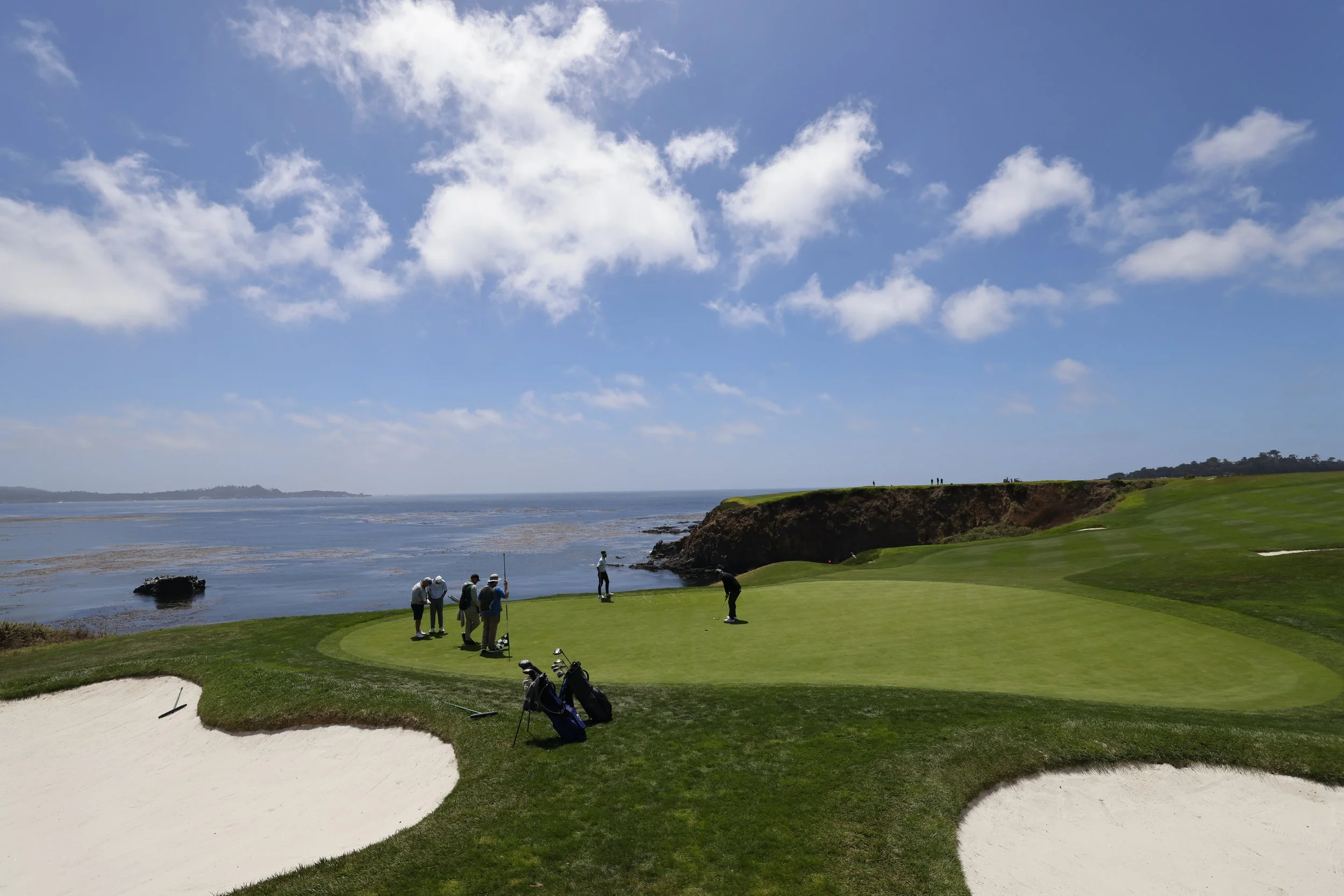
Pebble Beach green fees typically range from $575 to $650 per person depending on season and time of booking. This ranks among the highest green fees for public courses worldwide, but most golfers consider it a worthwhile investment for a once-in-a-lifetime experience.
The green fee includes a motorized cart, though walking with a caddie provides a more immersive and authentic experience. Caddies cost approximately $100-150 per bag plus gratuity (typically 20-25% or more). These experienced loopers provide invaluable course knowledge, read greens expertly, and enhance the overall experience significantly.
Additional costs include practice facility fees, pro shop purchases, dining, and potentially professional photography services to document your round. Budget $1,200-1,800 per person for a complete Pebble Beach experience including green fee, caddie, meals, and overnight accommodations.
When to Play
Each season offers distinct advantages at Pebble Beach:
Spring (March-May): Excellent weather stability, beautiful scenery, good availability, and ideal playing conditions make spring highly desirable. April and May are particularly attractive.
Summer (June-August): Peak season brings morning fog (especially June-July), higher demand, and maximum green fees. Afternoon tee times offer clearer conditions.
Fall (September-November): September provides arguably the best weather of the year with clear skies and moderate temperatures. October remains excellent, while November transitions toward rainy season.
Winter (December-February): Off-season pricing, best availability, but unpredictable weather with increased rain and wind. Good option for budget-conscious golfers willing to brave the elements.
Preparing for Your Round
Physical and Mental Preparation
Pebble Beach measures approximately five miles walking with moderate elevation changes. If you plan to walk, build up your walking endurance beforehand. Even if riding, the mental demands of a 4.5-5 hour round require stamina.
Practice your short game extensively before arriving. The course features small, undulating Poa annua greens that demand precision wedge play and confident putting. Focus on lag putting from 30-50 feet to avoid three-putts.
Set realistic scoring expectations. Most golfers shoot 5-15 strokes higher at Pebble Beach than their typical handicap. Accept this beforehand and focus on enjoying the experience rather than fixating on your score.
What to Bring
Pack for variable conditions regardless of forecast:
Multiple clothing layers including windbreaker
Rain gear (even during dry months)
Sunscreen and sunglasses
Extra golf balls (at least a dozen)
Multiple gloves for damp conditions
Comfortable, waterproof golf shoes
Camera or smartphone for photos
Snacks and water
Day-of-Round Strategy
Arrive 90-120 minutes before your tee time to allow for check-in, warm-up, and acclimating to conditions. Use the excellent practice facilities systematically—putting green first to gauge speed, then range work from short irons to driver, finishing with final putting practice immediately before your tee time.
During your round, trust your caddie's advice, play conservatively when in doubt, aim for green centers rather than pins, and embrace the nervousness as part of the experience. Take photos at iconic holes like the 7th and 18th, but remain mindful of pace of play.
Preserving Your Pebble Beach Memories
The Value of Professional Photography
Given the significant investment in playing Pebble Beach and the likelihood this represents a once-in-a-lifetime experience, professional photography becomes essential for preserving memories. While smartphone photos have value, they cannot match the quality, composition, and emotional impact of professional golf photography.
Professional photographers understand optimal positioning, lighting, and timing to capture both the spectacular landscape and authentic moments—your concentration over a crucial putt, celebration after a birdie, or the joy of walking down the 18th fairway.
When you've invested substantially in green fees, travel, and accommodations, professional photography represents a modest additional expense that dramatically enhances the lasting value of your entire experience. These images become treasured keepsakes you'll display in your home and revisit for years.
Final Thoughts: Your Pebble Beach Journey Awaits
Pebble Beach Golf Links represents golf's ultimate democratic treasure—a course where everyday golfers can experience the same venue, challenges, and thrills as the world's greatest champions. The combination of breathtaking coastal beauty, strategic brilliance, championship pedigree, and public accessibility creates something truly special in the golf world.
Planning your Pebble Beach experience requires time, resources, and preparation, but the reward is a memory that will last a lifetime. From the moment you arrive and see the iconic clubhouse, through the nervous excitement of the first tee, the awe-inspiring walk along the coastal holes, and the thrilling finish down the 18th fairway, every moment at Pebble Beach exceeds expectations.
Whether you're already counting down the days or still in the dreaming stage, start planning your Pebble Beach pilgrimage today. Research booking options, monitor weather patterns for your preferred season, prepare your game, and get ready to experience why this course has captured golfers' imaginations for over a century.
The fairways of Pebble Beach Golf Links await, ready to challenge your game, inspire your soul, and provide an experience that defines what golf at its finest should be.